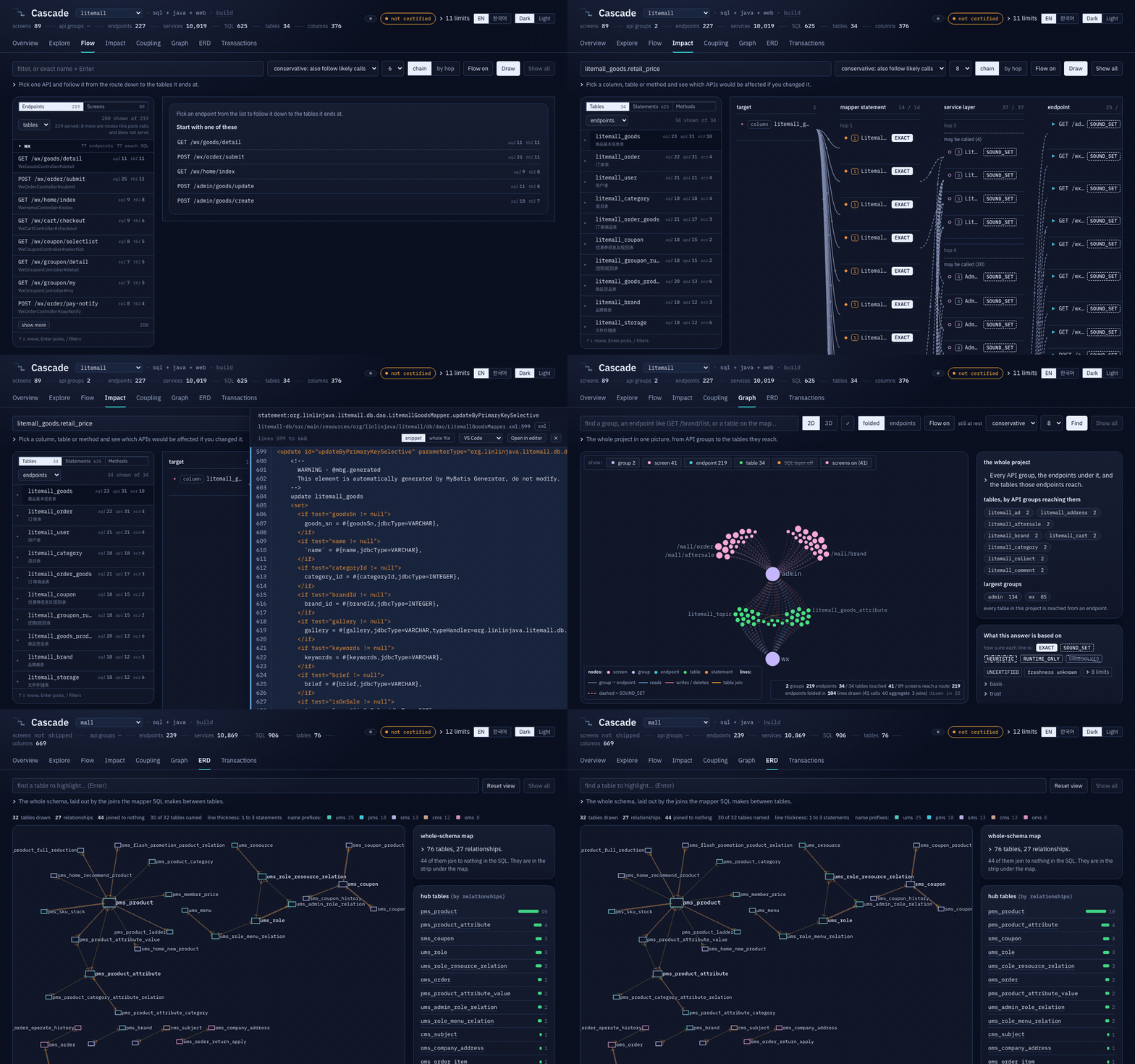
The thing a shallow code index does not give you is the walk in both
directions, end to end:
screen → frontend function → endpoint → service → mapper/ORM → SQL → table → column
column ← SQL ← mapper ← service ← endpoint ← frontend function ← screen
Three lanes produce it. The SQL lane (Python and sqlglot) turns a DDL file
or a pinned catalog snapshot into a schema, MyBatis XML into parseable
statements, and those statements into table and column reads and writes. The
Java lane (the JDK’s own parser, with no Gradle, no Maven and no dependency
classpath) stitches endpoint → controller → service → mapper onto them,
including persistence declared by @Entity or Spring Data rather than written
as SQL. The web lane (a vendored parser, no install) reads the code above
the endpoint: the frontend calls, and the router declarations that become
screens.
The honesty contract
Every answer carries four fields, and they are checked before the response is
serialised: a route that assembles a look-alike by hand dies in
assertContract() rather than shipping.
basis is what commit and which pack digest the answer is based on, and
whether that is current, behind, provisional-overlay or unknown.
unknown never reads as “current”.
trust is a computed level (UNCERTIFIED, GOLDEN_FAIL,
GOLDEN_PASS), never a typed-in one. With no golden corpus, the level is
UNCERTIFIED.
limits is what the engine could not see, in words, scoped.
truncated is how much of each list was cut, and the true total.
An empty list says why it is empty: not-shipped (the axis was never built),
degraded (built without something it needed), or none (looked, found
nothing). Those are three different answers and they do not collapse into [].
Where it fits
SAST and CodeQL look for vulnerabilities. Cascade looks for what a change
reaches, the round trip from a screen to a database column and back, with a
grade on every edge and no build to run. No SAST or dependency scanner answers
that round trip. Where the source does not settle a call, Cascade marks it
rather than inventing an edge: an answer you can calibrate is one an agent can
act on, and that is the whole point.
Quickstart
Prerequisites, and one command that tells you which of them you are missing:
node bin/cascade.mjs setup # the SQL lane: builds its python and installs the pinned sqlglot# plus a JDK 17+ for the Java lane (`brew install openjdk`; set JAVA_HOME)# the web lane needs nothing: its parser is vendored
node bin/cascade.mjs doctor # every prerequisite, its state, the remedy
Then, over any Spring with MyBatis or JPA tree:
# 1. what is in this tree? -> .cascade/{manifest.json,profile.json} + the registry
node bin/cascade.mjs init --root <repo> --project <id># 2. run the lanes -> a content-addressed pack. No lane flags: the inputs come# from the manifest, the profile and discovery.
node bin/cascade.mjs analyze --root <repo>
# 3. what can it answer, and what will it not? (before or after the analysis)
node bin/cascade.mjs estimate --root <repo>
# 4. serve it to an AI client over stdio...
node bin/cascade.mjs mcp --project <id># 5. ...or look at it yourself
node bin/cascade.mjs view --project <id># http://127.0.0.1:4319/